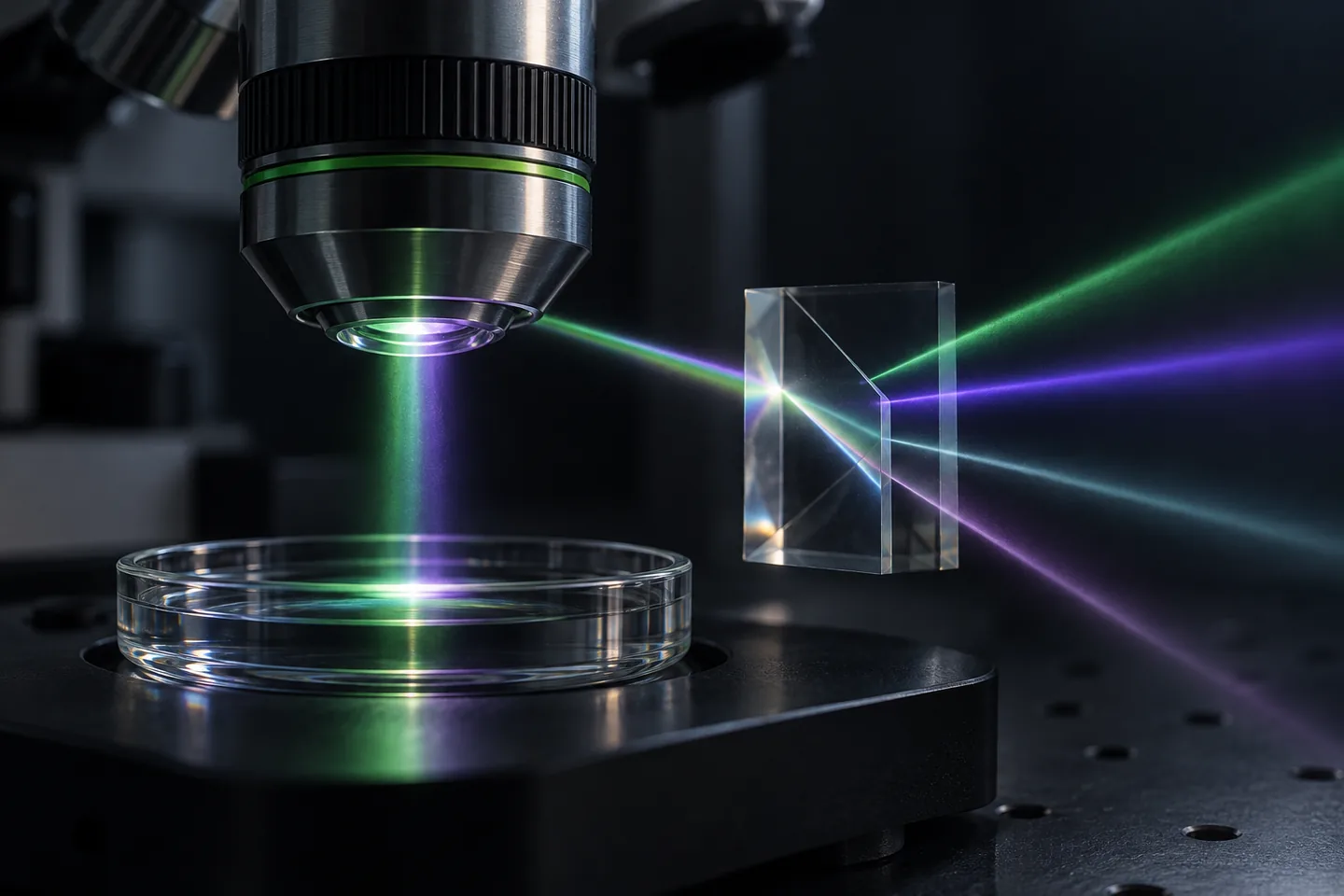
EPFL’s SPIFFI method uses four polarization channels to reconstruct a sharper image from one exposure. The peer-reviewed study appeared in Nature Methods on August 31, 2026; today’s university report covers the same result.
In calibration measurements, the authors resolved structures around 160–170 nanometres. They also demonstrated tracking mitochondria and microtubules in living cells. Reaching roughly 80 nanometres required further processing of many frames.
A potential benefit is observing brief cellular events that long image sequences can blur. For ageing research, clearer observation could help formulate questions about changes in organelles; the study demonstrates neither treatment nor rejuvenation.
Other laboratories need to test transferability to their specimens. Fluorescent labels, signal strength, calibration and the effects of illumination on cells will matter.
Optimistic editorial estimate: specialist laboratories could trial the method within 6–18 months. There is no supported date yet for widespread availability of a simple commercial setup.
Be the first to open the discussion.