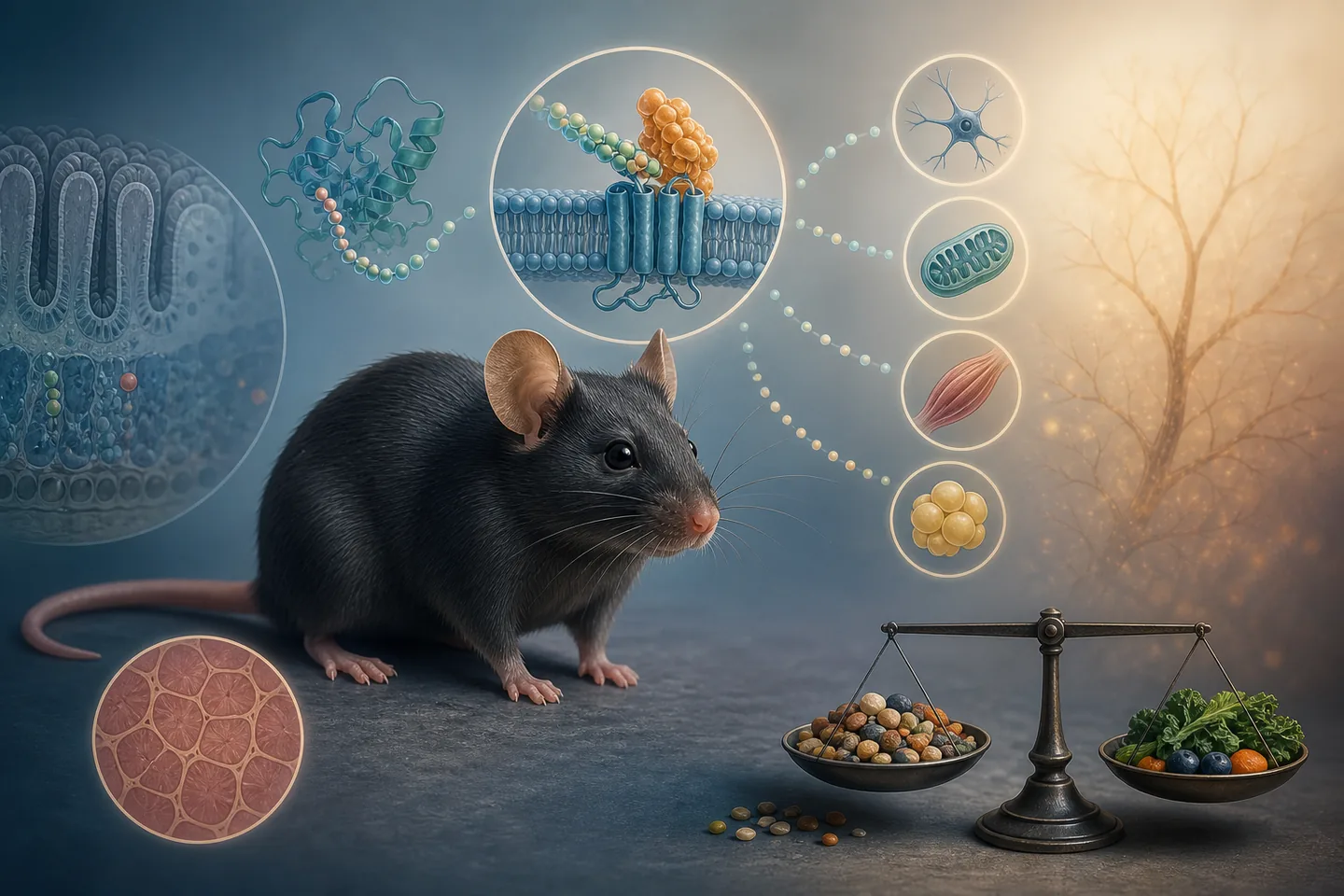
Researchers gave semaglutide to healthy female mice starting at 20 months of age, late in their lifespan. Median survival reached 834 days versus 742 days in controls, an increase of roughly 12%.
Treated mice performed better in coordination, muscle function, glucose handling and some memory tests. Tissue analyses also found weaker changes associated with aging, including inflammation and declining regenerative capacity.
Semaglutide reduced food intake by about 24%. An untreated group given the same calorie restriction achieved similar longevity, suggesting that lower energy intake explains much of the effect. Semaglutide nevertheless outperformed diet alone in several measures, including spatial memory and glucose control; the additional mechanism is unknown.
If independently confirmed to affect aging pathways beyond weight and metabolism, the result could guide trials aimed at preventing frailty or delaying several diseases together. It is not a reason to use semaglutide outside approved indications and does not show that the drug extends human life.
Replication in males, other strains and doses, long-term safety work and randomized human trials with prespecified clinical outcomes are needed. Optimistically, stronger evidence on functional aging in treated patients could arrive in 3–6 years; proving an effect on healthspan or survival would probably take 8–15 years or longer.



Be the first to open the discussion.