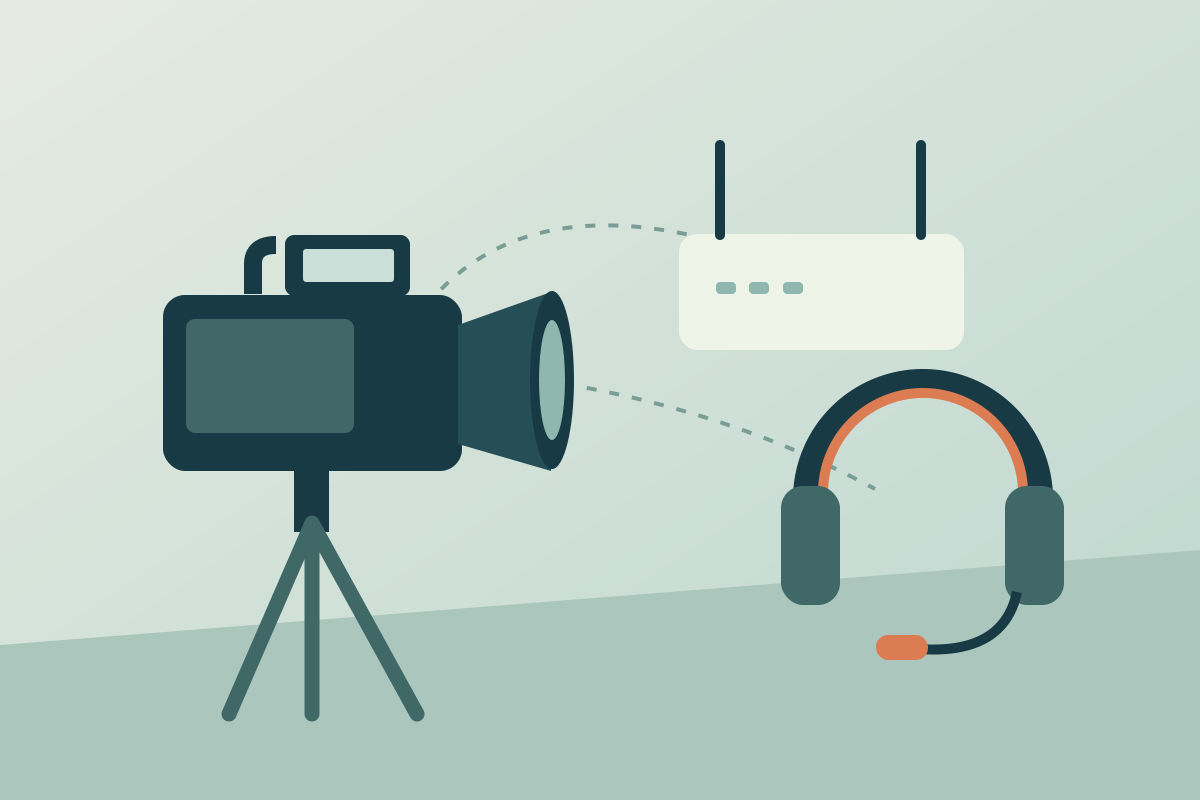
In an October 1 report, the EBU describes a Copenhagen demonstration: five networks operating side by side supported 16 wireless cameras and intercom. This is an organizer's report, not an independent transmission-performance measurement. Its value is a practical coexistence trial, not a universal quality guarantee.
Imagine a sports camera moving from the pitch to backstage. A private network might give the crew more control over who connects and which resources are reserved for production. A smaller cultural event might benefit from a reusable network kit instead of designing each location from scratch. These are possible applications, not services promised by the trial.
The key question is not whether a display says 5G, but whether the entire signal path works. Tests must examine delay, its variation, dropouts, video codecs and connection to the control room. Intercom needs usable communication under load, not merely connectivity. A successful camera link does not show that the same approach can replace every stage microphone.
Deployment requires compatible devices, operators, monitoring and a backup path. Local radio rules and operating permissions must be settled separately: a European workshop does not establish a Czech licence or its price. A compact kit is useful only if the crew can commission it and detect problems before the audience does.
Our optimistic editorial estimate is 1–3 months for a limited pilot with an equipped team, qualified technicians and resolved permissions. A sensible first target is a secondary shot with backup, not cutting every cable immediately. Wider use will depend on repeatable measurements at the actual venue under genuine production load.


Be the first to open the discussion.