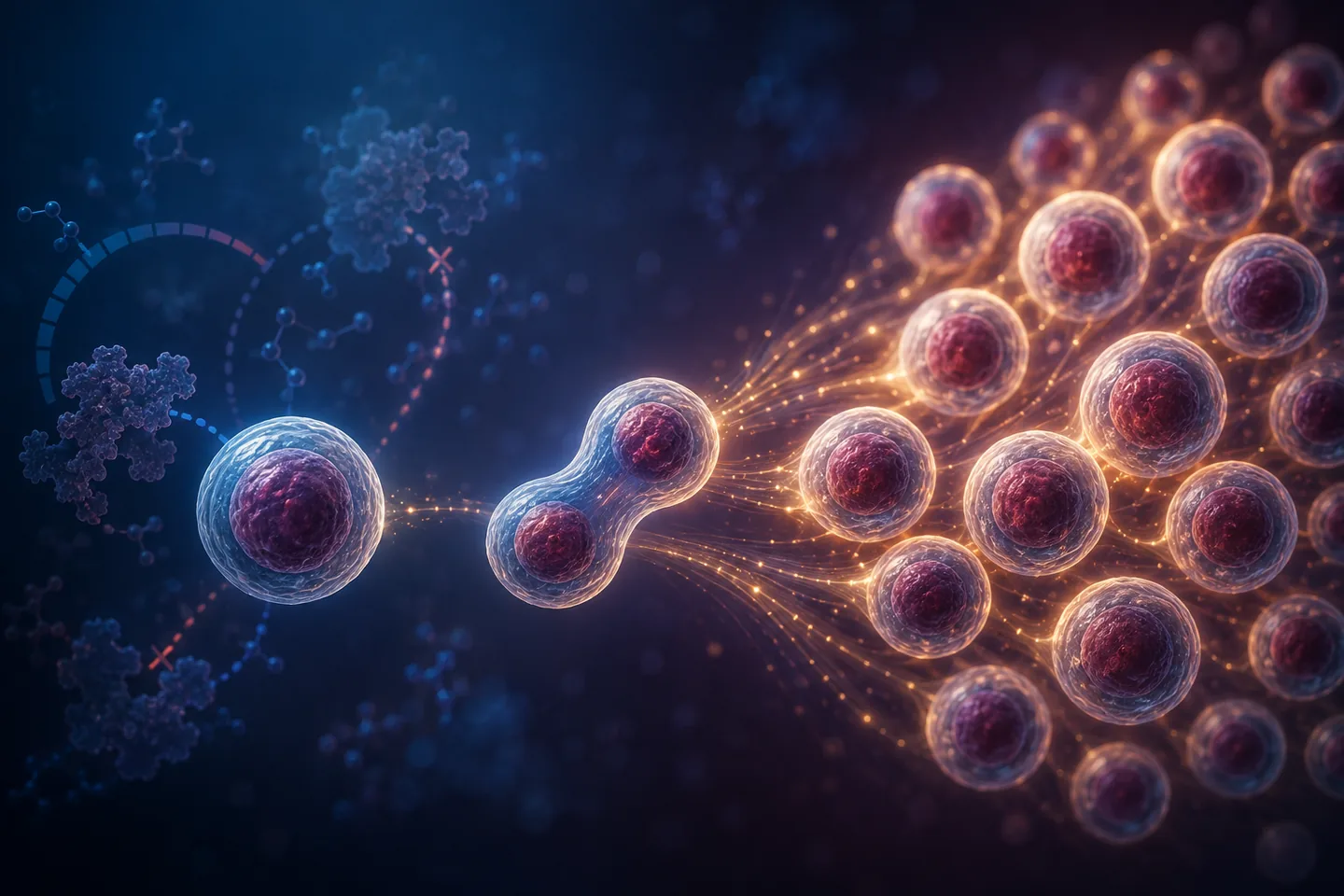
Haematopoietic stem cells can rebuild blood and the immune system, yet outside the body they often begin to mature and lose long-term regenerative capacity as they divide. A team led by Kumamoto University researchers found that self-renewing mouse cells contained less glutamate than cells moving towards differentiation.
The researchers therefore used R162 to inhibit glutamate dehydrogenase Glud1 during culture. Together with strong JAK2–STAT signalling, this preserved a subset of cells in a stem state without merely stopping division. Over thirty days they reported an approximately 500-fold expansion of functional mouse haematopoietic stem cells retaining conventional markers.
This is peer-reviewed but preclinical work in mouse cells. It does not show that the same method is safe or effective in human cells or patients. R162 is an experimental inhibitor and metabolic restriction may have side effects. The authors also disclose related patent applications and KAKETSUKEN funding, a relevant competing interest rather than evidence that the result is wrong.
If confirmed in humans, the mechanism might yield more useful cells from a small bone-marrow or cord-blood sample. That could broaden transplant availability, speed blood-system recovery and make ex-vivo gene correction easier. Stable cultures could also supply better material for modelling blood disorders and testing drugs without repeated collection.
Independent replication, durable engraftment, safety and exclusion of genomic damage or malignant clones are required first. Human-cell experiments and clinical-grade manufacturing will be decisive. Optimistically, convincing human laboratory results might emerge in 2–4 years and early clinical trials in 5–8 years; broad use would probably come later.

Be the first to open the discussion.