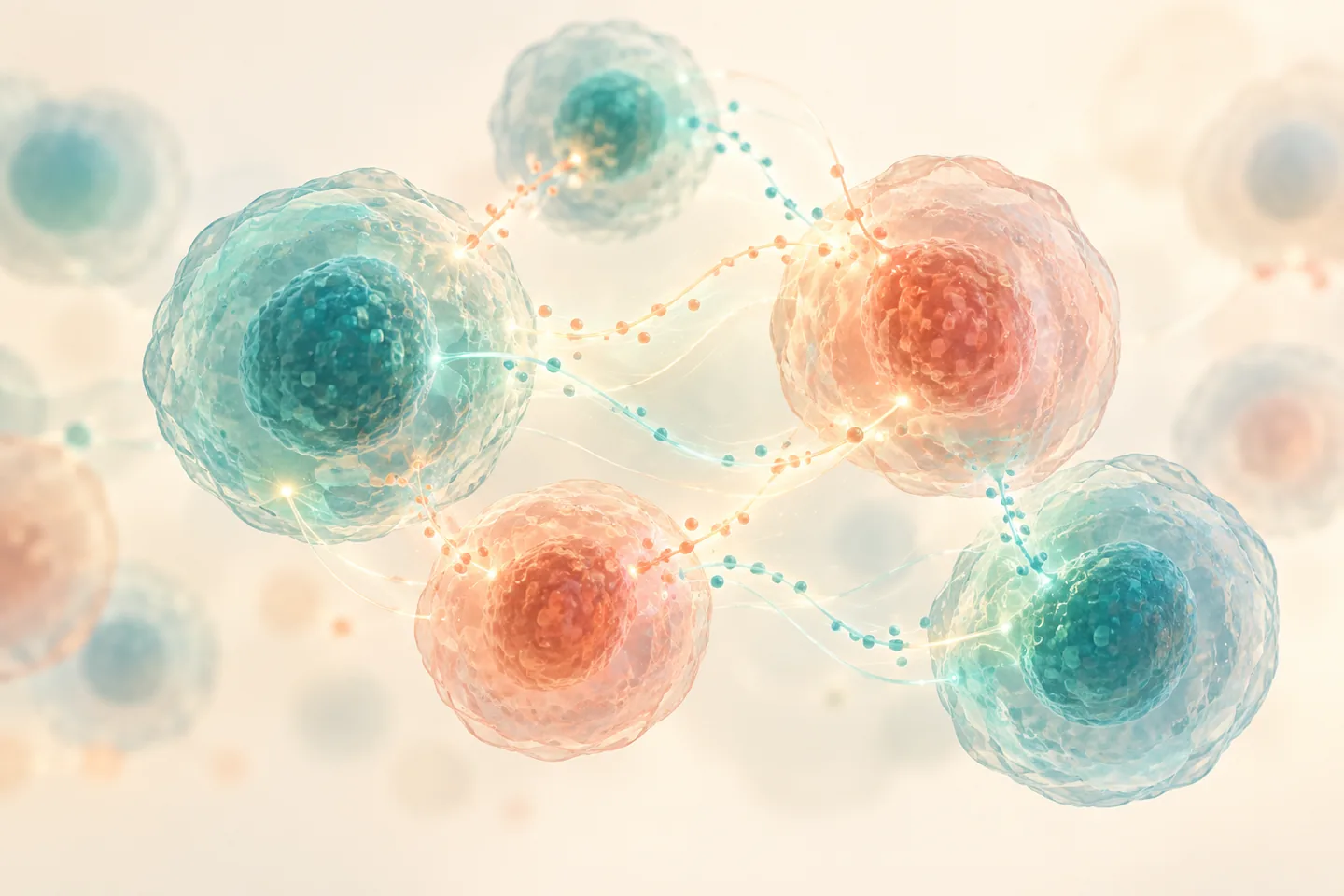
A study published in Nature Methods on September 8 introduces IRIS. The model learns from controlled perturbations of human pluripotent cells and infers signaling states in mouse embryo atlases.
The team examined six major signaling pathways. The method identifies transferable gene-activity patterns, rather than directly recorded messages between cells. Some predictions were subsequently tested experimentally.
We see potential in finding conditions for preparing laboratory cell models. If the model reliably narrows the combinations worth testing, it could reduce the work needed to refine individual protocols.
Transfer between laboratories, measurement methods and additional cell types still needs testing. An embryonic-system result does not itself demonstrate restoration of an adult human organ or an effective treatment.
Optimistic editorial estimate: an independent laboratory pilot could take 6–18 months. This study cannot establish a clinical timeline.


Be the first to open the discussion.