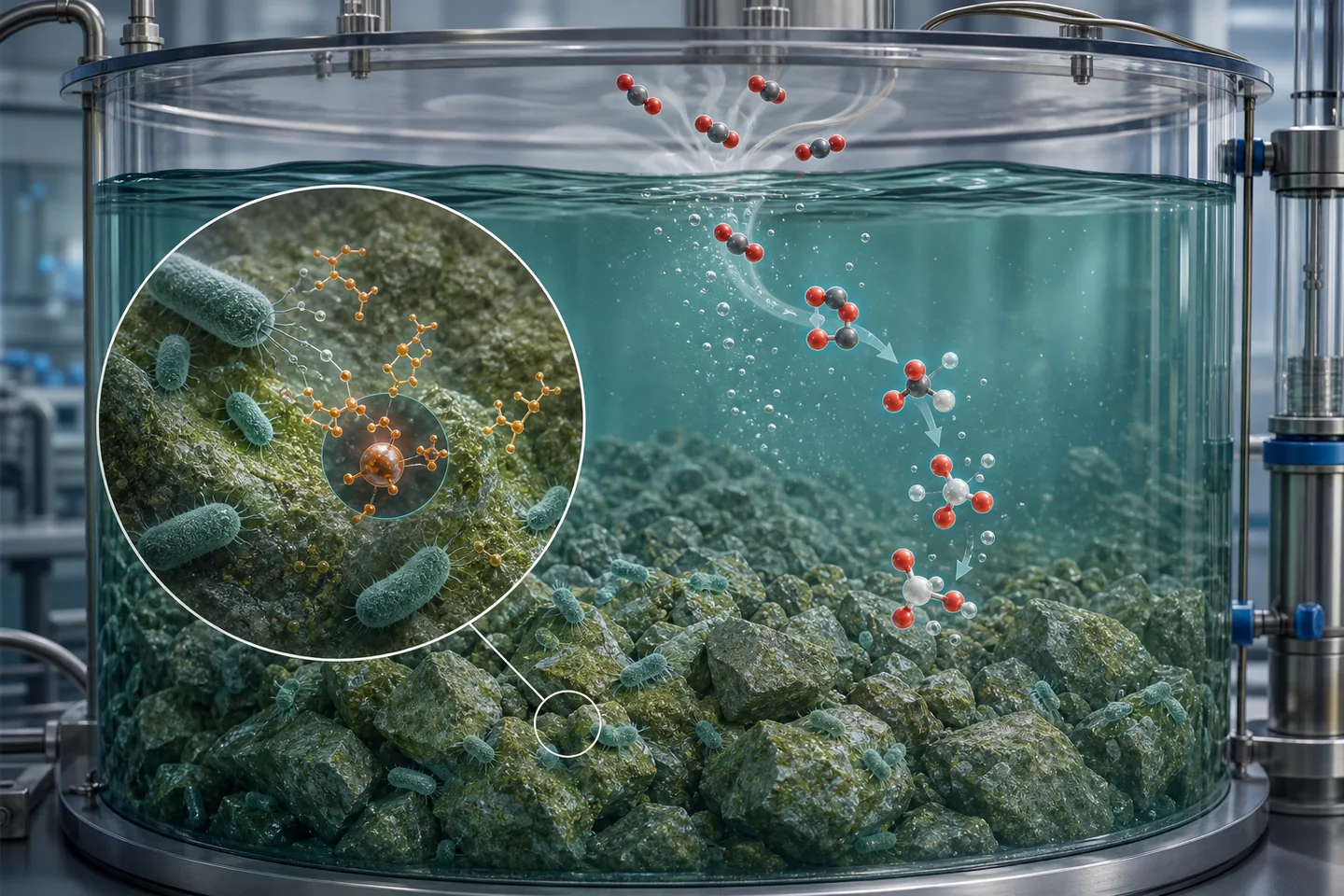
Silicate weathering naturally converts carbon dioxide into dissolved bicarbonate, but it is slow. The team engineered the marine bacterium Alteromonas macleodii to continuously make petrobactin, a siderophore that extracts iron from mineral surfaces.
Across four small continuous reactors, the engineered strain produced over 100 times more petrobactin and increased olivine dissolution, measured through nickel release, by 2.6 ± 1.0 times over the abiotic control. The wild type produced no statistically significant increase.
In a real-seawater pilot, magnesium release reached 3.1 times the control during part of the run, while alkalinity production corresponded to about 0.50 grams of CO₂ per day if retained as bicarbonate. Performance declined after roughly three weeks as biofilm, crusts and passivation developed; probably only the upper mineral layer reacted.
If the mechanism can be sustained, contained coastal reactors could combine fine olivine and seawater to produce durable alkalinity. A plausible early use would be a specialised plant with controlled biomass and rigorous carbon measurement, not uncontrolled environmental release.
Deployment requires biological containment, competition tests with natural microbes, control of fouling and passivation, cheap renewable feedstock, and a full accounting of mining, grinding, transport and energy. Optimistically, larger contained pilots might appear in 3–5 years and first limited plants in 7–12 years, only if independent trials show genuinely net-negative emissions.



Be the first to open the discussion.