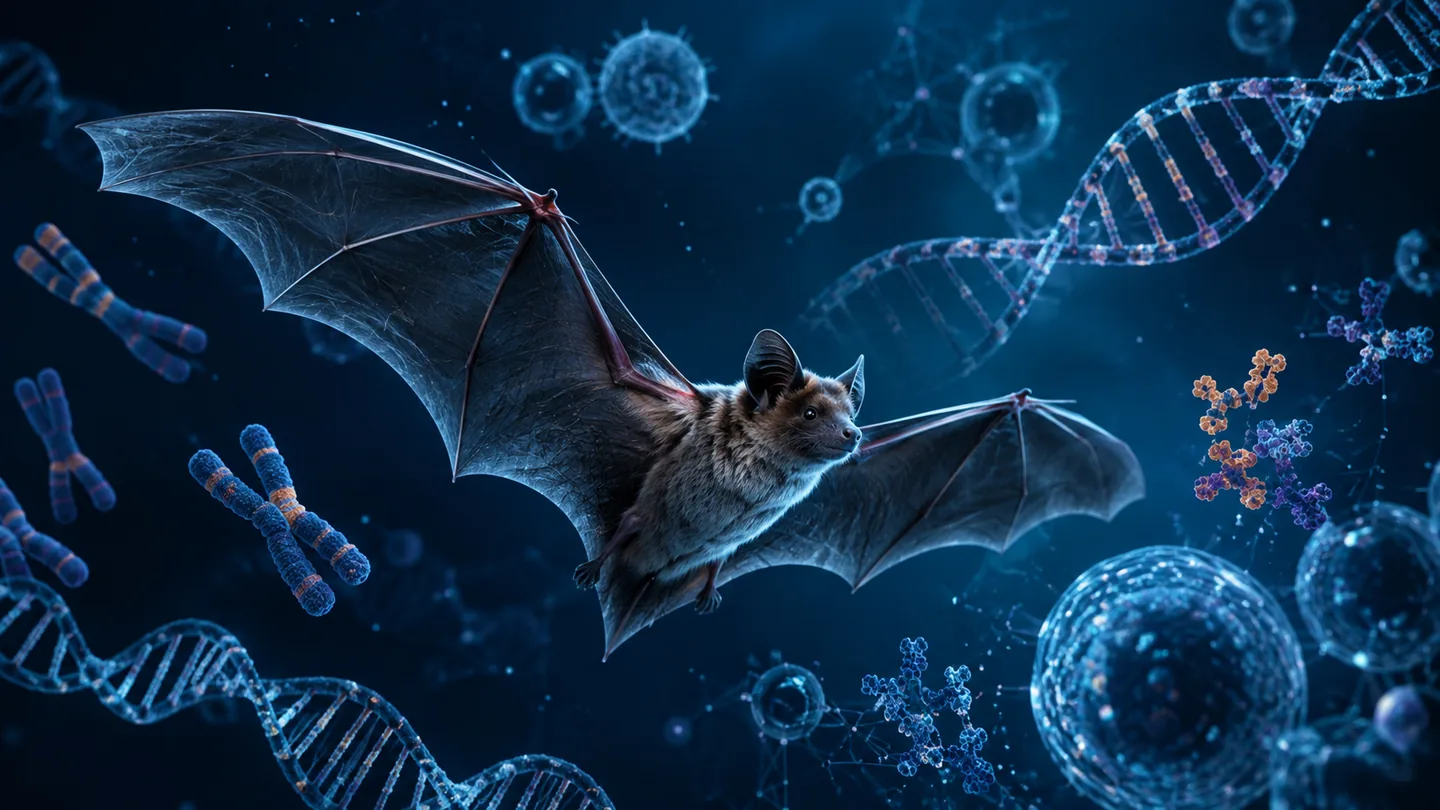
An international team assembled near-complete genomes for eight closely related Myotis bat species and established primary cell resources. Lifespans vary markedly across these mammals, allowing the researchers to search for evolutionary changes associated with longevity, cancer resistance and viral infection.
Proteins interacting with DNA viruses showed increased signatures of positive selection, whereas RNA-virus-associated proteins displayed more prominent gene copy-number changes. The authors also resolved several forms of the antiviral EIF2AK2, or PKR, gene and tested functional differences in cells.
In the long-lived Myotis lucifugus, the team observed a distinctive primary-cell response to DNA damage and selection signals in cancer-related pathways. The findings support a hypothesis that immunity, cellular maintenance and lifespan evolved together in bats, but they do not establish a single cause of longevity.
The work may help researchers choose mechanisms for further aging and immunity studies. Before any human therapy could be considered, individual mechanisms require replication across species and models plus causal and safety evidence. New laboratory targets could emerge within 3–7 years; this study cannot justify a clinical timeline.


Be the first to open the discussion.