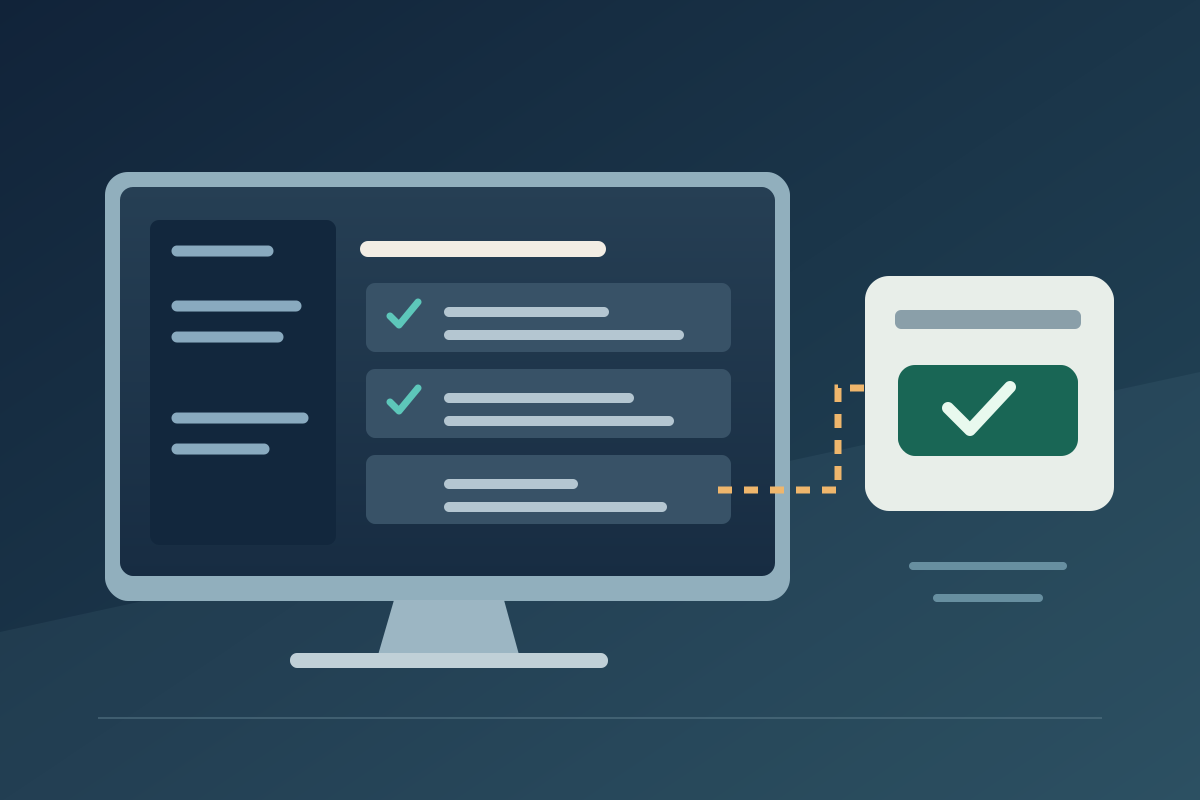
On 29 September, OpenAI introduced Dots: assistants powered by GPT-6 Astra, with their own cloud computer, that can continue tasks between conversations. Connected apps provide information; users can inspect activity and set rules for individual actions. Specialist enterprise versions remain a preview of a future offering.
Current documentation places the gradual Pro rollout outside the European Economic Area, Switzerland and the UK. Business Premium covers supported ChatGPT regions; an administrator must enable the Enterprise beta. The announcement therefore does not mean immediate access for every Czech, German or Italian subscriber.
The interesting part is not another chat mascot, but assigning a machine an ongoing responsibility. A small business might receive an updated briefing on technical changes, proposed website fixes or invoice preparation. Such an assistant should deliver traceable results and drafts for approval, rather than just an impressive account of its own activity.
Useful deployment requires narrow permissions, tests on real tasks and human review of payments, publication and deletion. Savings should include time spent correcting mistakes. Background operation does not itself demonstrate reliability, while access to several apps increases the possible scope of an error.
Where access is already available, a small pilot could optimistically be assessed within weeks to three months. This is an editorial estimate for a limited workflow, not a date for fully automating a business. There is no defensible forecast for arrival in European Pro. The illustration depicts a generic workflow, not the Dots interface.
Be the first to open the discussion.